
By Ruby Scott-Wishart
In a rural Irish town at a wedding, Mal and Mairead’s marriage falls apart. But do we watch the pair break, cry and fight in real time together, face to face? No. Eugene O’Neil’s Heaven does not give the audience this gift.
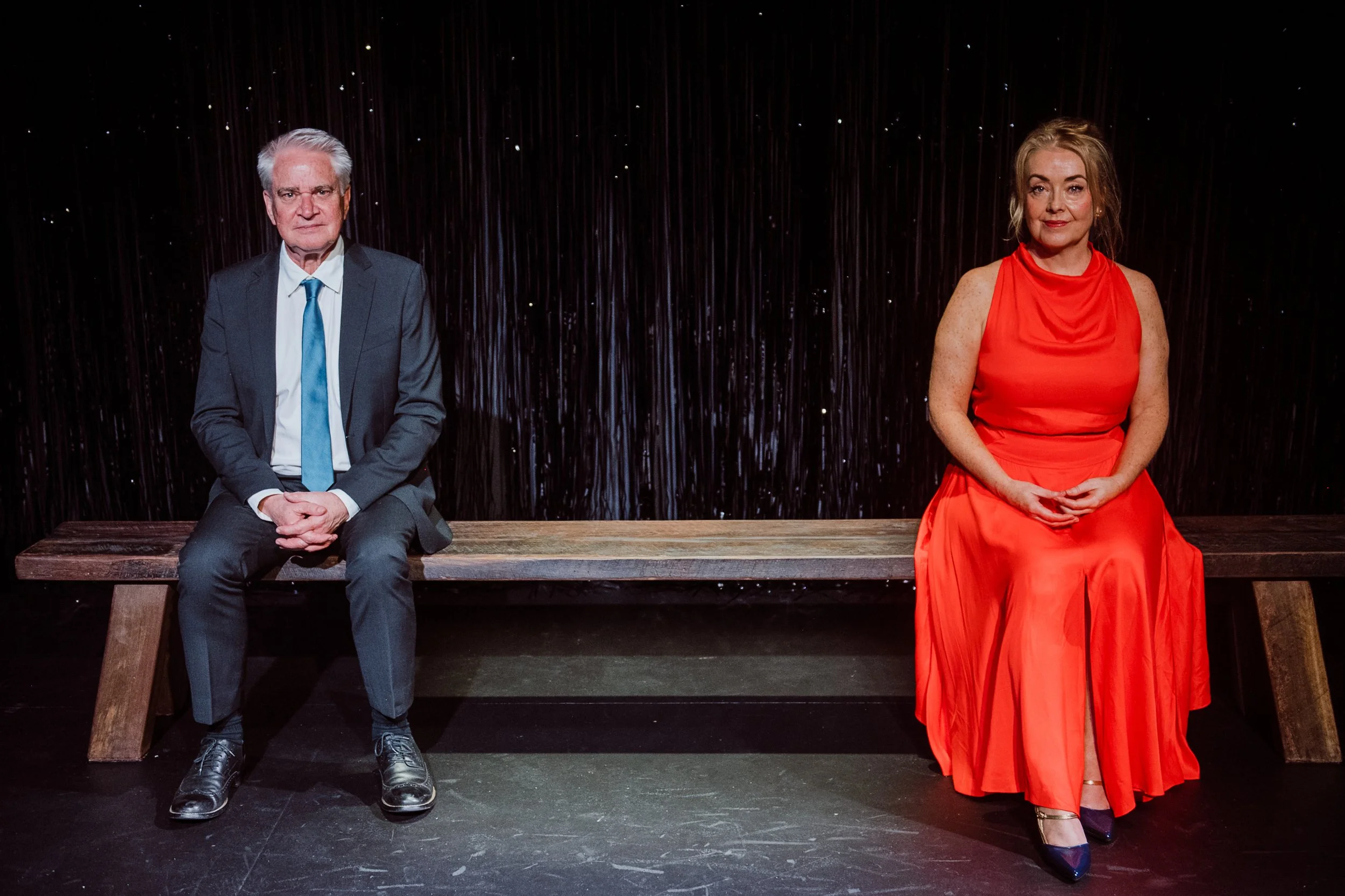
Heaven is unlike most shows I’ve seen. The two characters on stage for most of the show, do not interreact at all, speaking only in monologue to the audience. It’s a bit arresting at first, but you get used to it. Instead of scenes acted in front of us, it feels more like re-enacted diary entries.
For the faults and uncertainties I have with the show, Lucy Miller, who plays the fiery Mairead, and Noel Hodda playing the closeted and gentle Mal, are able to hold your attention. That’s a hard job to give an actor but they do it well. The intimate setting of the Loading Dock at Qtopia is the right fit for this show - you are up close and personal with these performers, and they have the time and space to sit in their performances. The very minimal set enhances the storytelling feel of the play. We are not here for flashing lights or stunning set, rather to see these two people.
They both have moments where they perfectly capture the light and shade of these characters, and the light and shade of life. The highs – cocaine in a car, sex with your first love – and the lows, the realisation that the person you have chosen to spend your life with isn’t the right one for you. For Mairead, her life with Mal has unsatisfied her, they are ‘pals’, a pair, but not lovers. For Mal (who I argue is the more interesting character) his queerness, a part of himself that he has pushed so far down he can’t even name it when it arrives, finally does. In a clip online Hodda describes Mal’s journey as “his reality become[s] the dream he’s always had, and the dream he’s always had becomes his reality.” This dream is embodied in Hodda’s performance. It truly feels like a child, a young boy’s spirit trapped in the body of a middle-aged man. On that, I must add that it is a gift to watch older actors perform – they have life, energy and spirit.
However, there are times when the characters falter and feel unreal. For example, both characters refer to Mairead’s fraught relationship with her daughter, Siobhan. As Mairead wanders the town square trying to find her husband, deciding whether to run away with her first love from her youth, and wondering what her life has all built up to, she receives a call from her daughter. She is pregnant. And suddenly it all falls into place: this is what her life has built up to, to be a grandmother, to guide her daughter through this change. But it feels unsatisfying. This realisation comes in the last few minutes of the play – if this was the point Mairead was going to come to, why did we spend most of the time listening to her retell her desires for a passioned love affair? Telling that story, of women of all ages getting the chance to freely explore their sexual lives deserves to be told in its entirety. And so does the complexity of familial relationships.
And just when Mal finally decides he will let his life, the life he pushed underneath, his queerness, become his life above, he disappears. We don’t see him again. I felt a bit gypped. I really wanted to see these characters come together, even if it was just for a moment. To watch the reality of their actions and realisations come crashing down, just for a moment. But that doesn’t happen, and I really wish O’Neil hadn’t made that choice.
I must admit, I’ve found it hard to write about this show. It’s not incredible nor terrible, its good, not great, but okay. Presenting queer stories from diverse backgrounds however, whether that be campy drag queens, gay lovestruck teens or the stories of closeted older queer people, is important and these stories must continue to be told.
Heaven is playing at Qtopia’s Loading Dock Theatre until the 31st of May
This review was written on the lands of the Wangal people of the Eora nation, and Qtopia resides on the land of Gadigal people.