
By Sarah Zeppel
They say if you love something, let it go, but what if that love is all you've ever known.
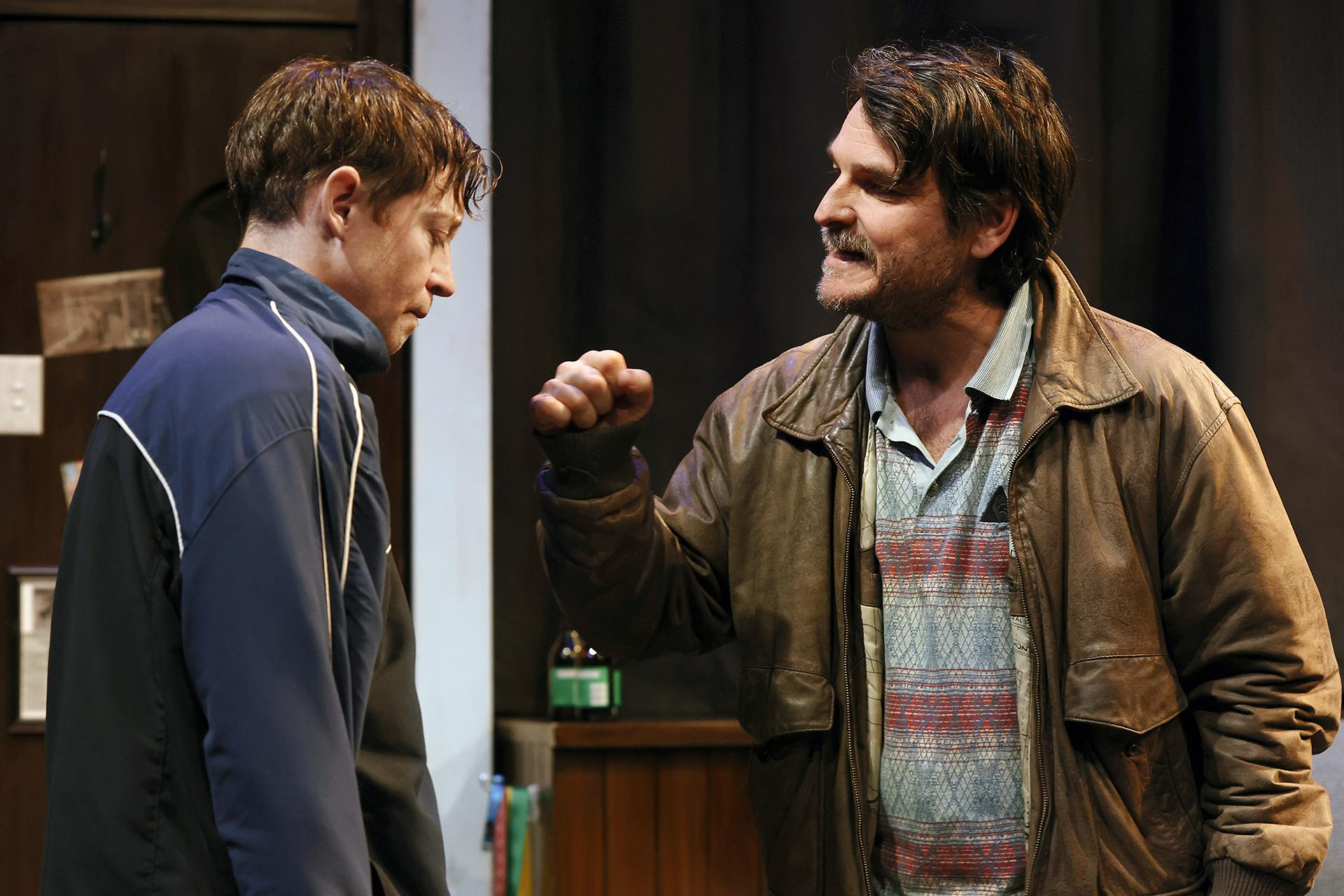
Although there was sadly no greyhound in the performance, The Dapto Chaser at Ensemble Theatre, written by Mary Rachel Brown, successfully captured the energy and spirit of the greyhounds in the performance. In a world where misogyny and homophobia are hidden in deep-rooted traditions, it was surprisingly refreshing and confronting to see the explicit misogyny of this dysfunctional Australian family. Although there were no female actors, the way in which these characters viewed women was explicit, seen in the way they treated the more ‘feminine’ men and how they valued traditional masculine qualities, such as anger and violence.
The dark comedy had surprising moments of humour which juxtaposed the serious struggles of the family, as they struggled with addiction and abuse, these habits were passed down from the father to the eldest brother. The relationship between the family also highlighted how any traits that were not seen as masculine were seen as weak. This conveyed the idea that masculinity is not teaching boys how to be men, but rather how not to be women, and when a man refuses these traditional expectations of masculinity, the men around him ridiculed him for failing to correctly perform masculinity.
The music was a highlight for the show as it reset the tone of the performance, as when the audience would feel uncomfortable after a scene, the energetic music would reengage them. However, the characters were making one wrong choice after another, to the point where as an audience member I wanted something to happen, for them to have to face the consequences of their harmful actions.
The play also successfully highlighted the consequences of gambling in Australia, and how deeply rooted it is in many families lives as “he was more married to the track, than his wife”. As all the characters appear to love greyhounds, yet, as said by many great philosophers, if you are hurting the thing you love, it isn’t love. This approach wasn’t discussed during the play, as it appeared that the family loved their greyhounds even though they made them race. Greyhound racing often causes track injuries and fatalities for greyhounds, as well as the maltreatment of the animals, as many are often kept in cages their entire lives, then being euthanised when they’re no longer successful. These practices have been reduced, yet greyhound racing is still an unethical industry. The misguided love the family showed the greyhounds also closely resembled the misguided love they showed each other, as the only way the family showed respect to each other was when they were engaging in aggressive, harmful actions.
This was a clear display of toxic masculinity and the misogyny that is ingrained in Australian culture. Watching this play was incredibly uncomfortable witnessing the casual misogyny of this era which would not be accepted today. The play was a reminder of the toxic families in Australia struggling with addiction and generational trauma.
This play questioned the notions of familial love, and how we harm ourselves when striving for the love and validation of those around us. The most freeing thing someone can do is to let go and choose themselves.